|
A CLASSIC ROUTE AS OLD AS BIKECENTENNIAL
Grand parks along the TransAm include Yellowstone and Grand Teton National Parks, among the best in the United States. One additional
treat: because this route has been ridden by cyclists for years, many of the cafes, restaurants, and overnight accommodations along the
route have kept journals consisting of entries written by cross-country riders from previous years, providing you with a cyclist's history
of the route. Plan on around three months (give or take) for the crossing. Some traverse the route quicker, but this leaves less time for
sightseeing. This route can be ridden from May through September. Note that snow can occur at any time in the Rocky Mountains, and the
highest pass on the route is over 11,500 feet. Although the prevailing weather patterns are from west to east, local wind patterns are more
dependent on the passing pressure systems and local terrain, so you can expect your fair share of tailwinds and headwinds regardless of
which direction you ride the route.
Astoria, Oregon, with the hills of a miniature San Francisco, is the official beginning-of-the-road. The view from atop the Astoria Column
is well worth the uphill pedal. Stretches of beaches, outstanding state parks, steep ascents and descents, and great seafood abound during
your first days of riding before you turn inland to the Willamette River Valley. Eugene is the largest city along the route, with about
140,000 residents. Other sizable cities along the way are Missoula, Montana; Pueblo, Colorado; and Carbondale, Illinois. The lush, green
western side of the Cascade Mountains is a startling contrast to the dry terrain you'll be riding into after McKenzie Pass. The road over
McKenzie Pass literally cuts through an ancient lava field and offers spectacular views of the Three Sisters and other snow-capped volcanic
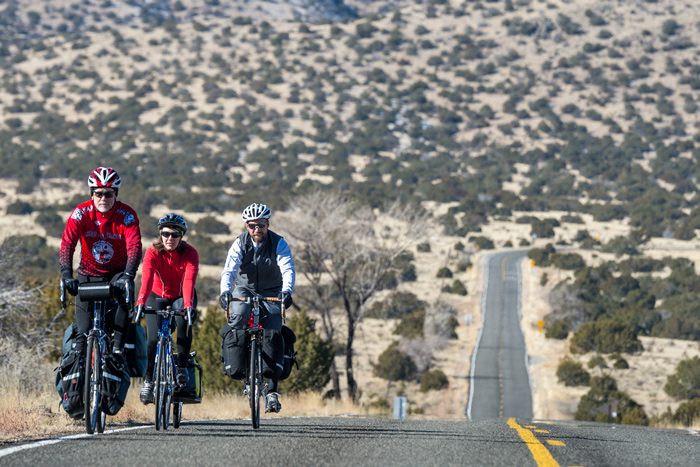
peaks of the Cascades. Central and eastern Oregon is made up of dry, mountainous terrain and is good place to carry extra water. The
National Historic Oregon Trail Interpretive Center outside of Baker City is a must-see, and after completing your trip crossing the
country, you'll have no trouble relating to the experiences of the early pioneers.
Idaho offers a wonderful ride along the Salmon River, and some interesting Native American historic sites to visit. The route then follows
the winding, scenic Lochsa River for the longest ascent of the trip (around 70 miles). You'll climb up and over Lolo Pass, enter Montana,
and soon reach the spur into Missoula. Missoula, a college town, provides one of the highlights of the route, featuring Adventure Cycling
headquarters with its "cyclist's lounge" and other amenities, along with whatever services you may require in town. Beautiful panoramas and
mountain passes await you in Montana.
The views in Yellowstone National Park and of the Grand Tetons in Wyoming are incomparable, and memories will last a lifetime. It's worth
an extra day or two off the bike to experience as much as you can of these two phenomenal national parks. Towns such as Dubois and Lander
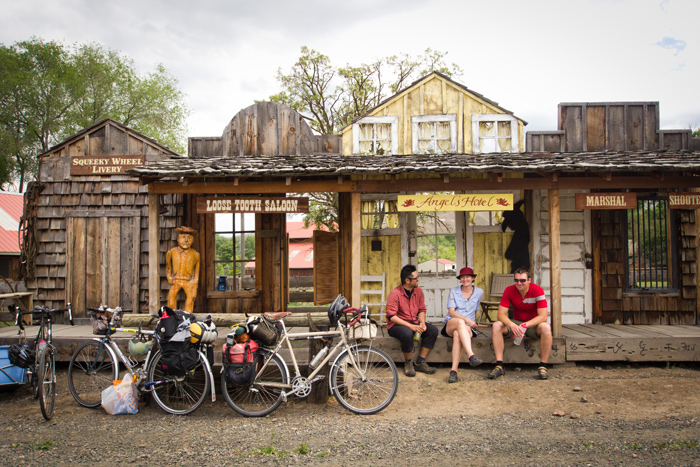
remind you that you're in the West, with their historic architecture and western-style cooking. Lamont is an oasis in the windy, desolate
Great Divide Basin, and serves up a mean bowl of chili.
The scenery quickly changes from dry, high desert to alpine as you reach Kremmling, Colorado. Touristy Breckenridge is another great place
for a layover day. You begin a long climb to crest the Continental Divide at Hoosier Pass, 11,542 feet, up amongst snow-covered peaks. As
the route leaves the Rockies, Royal Gorge Park offers a fun layover day, either for hanging out at the Arkansas River bridge or taking a
helicopter ride over or a raft trip through the gorge. Pueblo offers bike shops and great places to eat; it also serves as the halfway
point of the TransAm Trail (time to celebrate!). It's a good place to stock up -- it's the largest city you'll pass through until
Carbondale, Illinois.
Things start to dry out as you get into the eastern part of Colorado and cross into western Kansas. Carrying extra water is a good idea
here -- this is hot, barren country. Right around Haswell, Colorado, you'll see your last hazy glimpse of the Rocky Mountains. Overnights
at city parks in Kansas are usually accompanied by cool dips in the city swimming pools. You might have to do some early morning and early
evening riding to escape the midday heat. Don't miss the pies at Cookie's in Golden City, Missouri! The flat-as-a-pool-table terrain of the
Great Plains will change quickly into the roller-coaster riding of Missouri. You'll find Missouri offers Civil War history, terrific
canoeing (at Eminence), and an excellent swimming hole (Johnson's Shut-Ins State Park).
The route crosses the Mississippi River at Chester, Illinois, and heads into Carbondale, another fun college town. A ferry takes you across
the Ohio River into Kentucky, where you'll enjoy the evening fireflies at your campsites. Kentucky offers rolling white-fenced farms and
woodlands until reaching Berea, the gateway to the Appalachian Mountains. A loop south of the route will take you to see Mammoth Caves
National Park, the longest cave system in the world. Past Berea, you'll spend some time ascending and descending the mountains of the
Appalachians, and riding part of the Blue Ridge Parkway in Virginia. The mountains turn to rolling hills and then flat riding through lush
plantations and farmlands. The last stretch of the route is rich in the history of the American Revolution, with Colonial Williamsburg as
the highlight. Yorktown, situated on the Chesapeake Bay, is the route's end.
Terrain
Some stretches of the western portion of the route follow large river valleys and can be generally flat, but expect some climbing almost
every day between Astoria, Oregon, and Pueblo, Colorado. The passes throughout the Rocky Mountains are generally long but not terribly
steep. The descents from these passes are, of course, a blast. Most of Kansas is beautifully flat. Missouri through the Ozarks and eastern
Kentucky through the Appalachians offers short, steep climbs. The Virginia portion of the route, surprisingly, has more total elevation
gain than any other state.
Logistics
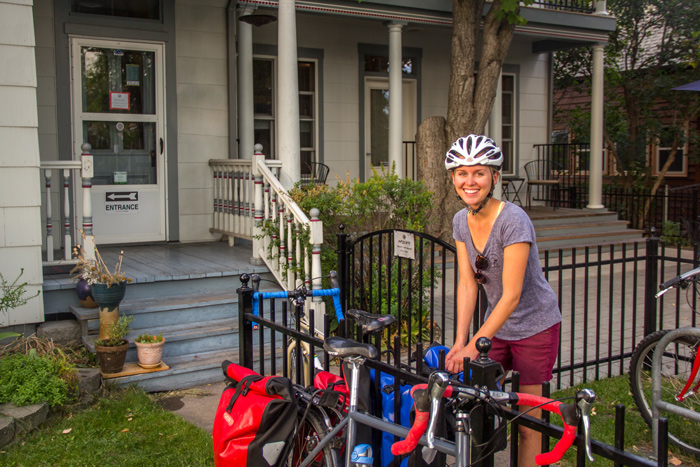
Camping choices will vary across the country between small private campgrounds, city parks, state and national parks, national forests, and
the occasional back yard. The northern Oregon coast is a heavily traveled tourist route and is flush with camping and service
opportunities. From Oregon eastward through Kansas, you'll find services limited mainly to the towns along the route. Carrying extra water
in the West is a good plan. Camping options improve once you're in the Rockies, but you should still expect some long stretches between
accommodations and services. Options will increase near tourist areas such as Yellowstone and Grand Teton National Parks. Kansas is
legendary for its hospitality. Camping in city parks is the norm through Kansas and Missouri. Food, water, and overnight accommodations are
abundant from Missouri to Virginia.
Support the TransAmerica Bicycle Trail
Go to Top
|